Continuing the Legend of China's Natural Soda

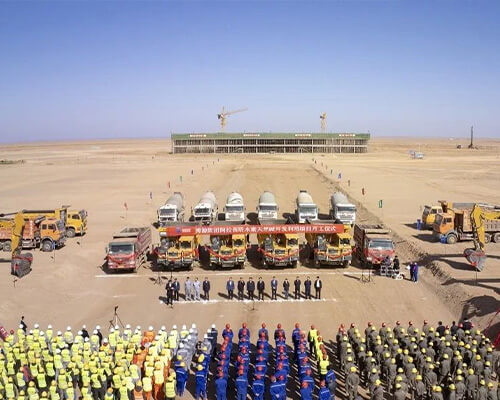
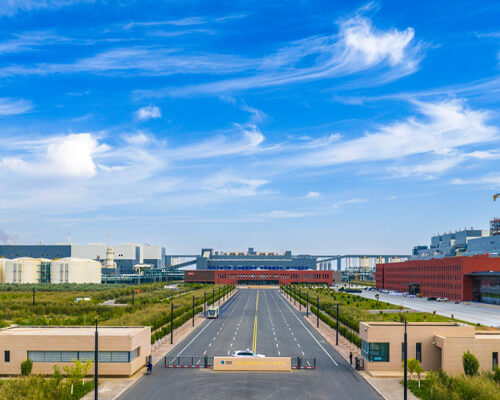
China’s soda ash industry enjoys a long and glorious history, and Boyuan’s natural alkali enterprise has forged ahead with tremendous momentum. In the late 1970s, 13 young pioneers rooted in the Mu Us Desert and created a splendid chapter of China’s natural alkali industry. At the turn of the century, by the Huai River, Boyuan’s team strove relentlessly and built the "Capital of China’s Natural Alkali". Today, we continue to write the legend of China’s natural alkali in the Gobi of northern Xinjiang.In the autumn of 2018, the exploration right of the Tamusu natural alkali deposit in Alxa was put up for public bidding. Bordering the China-Mongolia frontier Gobi to the north and the Badain Jaran Desert to the south, it had been a desolate, uninhabited wilderness since ancient times. Plagued by sandstorms, scorching heat, bitter cold and severe drought, the land deterred most people for its harshness and remoteness. However, after thorough geological research, Boyuan recognized its huge potential and won the bidding.We assembled a professional team to conduct detailed exploration and discovered high-quality ore deposits. With foresight and courage, we abandoned the traditional alcohol-coal route, focused on the Yingen area, and drew a grand blueprint for natural alkali development.From site survey, drilling tests to foundation laying and construction, Boyuan’s builders chased dreams in the vast Gobi. Braving sandstorms and freezing winds, they worked with unwavering perseverance to pave the way for success; working day and night against scorching sun, they strove to scale new industrial heights. They planned meticulously in simple sheds and toiled tirelessly on the construction site, fighting day and night to push the project forward.To solve water supply, we laid a 350-kilometer pipeline through mountains and deserts, with all 30,000 welding seams completely flawless. Despite repeated disruptions from the COVID-19 pandemic, we stayed united, strictly followed the schedule, and overcame difficulties through government-enterprise collaboration.After more than 1,000 days and nights of hard work by tens of thousands of builders, the first production line of the Alxa Natural Alkali Project rolled out qualified products in June 2023. The first phase reached full designed capacity in the following year, and the second phase was completed and put into operation one year later. With an annual capacity of ten million tons, it has become the world’s largest natural alkali production base, ushering in a new industrial era and reshaping the global soda ash market landscape.Emerging as a new chemical city in the Gobi, this shining pearl of northern Xinjiang has amazed the whole nation. Its grand scale, rapid construction, superb quality, advanced technology, top-tier equipment and fruitful innovations have earned worldwide attention and led the industry.Boyuan masters independent core technologies and innovates production processes to build core competitiveness. We efficiently exploit thin ore beds, greatly improve resource utilization, solve the problem of ore composition changes, and set new records for single-line capacity. Technological innovations reduce energy consumption by 40% and water consumption by more than 50%. Refined alkali liquor technology consolidates our quality leadership, and meticulous craftsmanship forges a world-class brand.The once barren desert has been utterly transformed. Saxaul, euphrates poplar, red willow and Russian olive thrive, turning the thousand-li Gobi green. At night, bright lights illuminate the wilderness, and neon glows against the starry sky. The once uninhabited wilderness has become a livable, eco-friendly chemical complex, a place everyone yearns for.The journey of the Alxa Natural Alkali Project is arduous but glorious, and Boyuan’s spirit will be immortalized in history. Guided by the goal of building a strong soda ash country, we worked hand in hand with the construction army of China National Chemical Engineering; committed to creating social value, we received strong support from Party committees and governments at all levels.With the courage to march forward despite all difficulties, Boyuan people composed an epic of entrepreneurship that "fights against heaven and earth, moves the world, and transforms the land". We blazed new trails where there were none, turned impossibilities into realities, and created a miracle acclaimed by the world. A new era of China’s natural alkali industry has begun, and the global alkali chemical landscape has been reshaped.Led by the Party building, we consolidate our foundation and forge our soul; through innovation, we open new prospects. Guided by the "dual carbon" goals, we explore low-carbon development paths, integrate new energy, and layout future industries. We break into new tracks, achieve carbon-free coal utilization, build new industrial chains of green hydrogen, ammonia and alcohol, and synthesize new products using wind, solar, air and water resources, writing a new chapter of high-quality development.Today’s Boyuan is deeply rooted and thriving. Responding to the call of the times, we join hands with peers to develop green chemical industry; shouldering the national mission, we march toward a zero-carbon future.Tomorrow’s Boyuan has a bright future. The vast Gobi holds abundant resources, and the goal of building a century-old enterprise is bound to come true.Great Boyuan stands firm and ambitious, marching toward a bright future; sincere Boyuan upholds integrity, embracing the spring breeze of the era.The construction of the Alxa Natural Alkali Project has gone through countless hardships. With its successful completion, we are filled with deep emotion. Here, I sincerely thank Party committees and governments at all levels and friends from all walks of life. As a veteran of Boyuan, I also pay the highest tribute to all Boyuan staff!Dai LianrongDecember 2025
Boyuan Group adds two more national-level
Boyuan Group adds two more national-level "green factories"

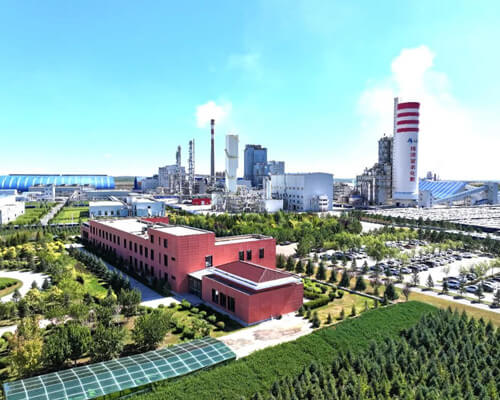
On February 5th, the Ministry of Industry and Information Technology (MIIT) released the list of green factories for 2025, with Boyuan Yingen Chemical Co., Ltd. and Xing'an League Boyuan Chemical Co., Ltd. making the list. This adds two more national-level "green factories" to the Boyuan Group's portfolio. To date, the Boyuan Group has four national-level "green factories": Henan Zhongyuan Chemical Co., Ltd., Boda Shidi Co., Ltd., Boyuan Yingen Chemical Co., Ltd., and Xing'an League Boyuan Chemical Co., Ltd. It is understood that the MIIT conducts green factory assessments based on five aspects: low-carbon energy, efficient resources, clean production, green products, and intensive land use. The assessments are determined after recommendations from provincial-level industrial and information technology departments and expert review. The aim is to leverage government guidance and public oversight to demonstrate the leading role of green manufacturing and promote the green and low-carbon transformation and upgrading of industries and regions.

Inner Mongolia IHJUCHEM Industrial Co., Ltd. Sodium bicarbonate (baking soda)

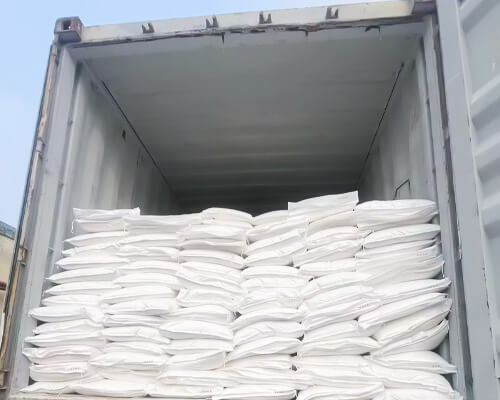
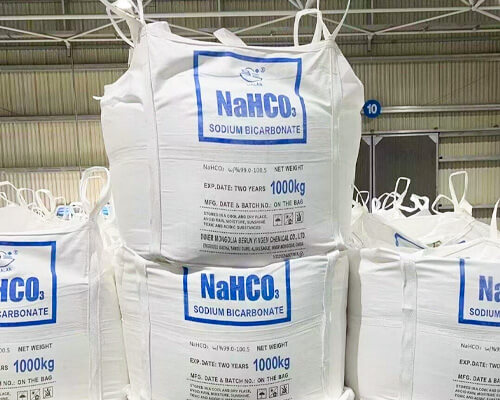
On February 26, Inner Mongolia IHJUCHEM Industrial Co., Ltd. responded to investor inquiries on its interactive platform, stating that the production of all its products is proceeding in an orderly manner according to the annual work plan. The second phase of the Alkali project is currently undergoing trial operation, with production capacity gradually ramping up. After the full production capacity of the second phase of the Alkali project and the 1.2 million tons/year carbon recovery sodium bicarbonate project is released, the company's soda ash production capacity will be 9.6 million tons/year; sodium bicarbonate production capacity will be 3.1 million tons/year; and urea production capacity will be 1.54 million tons/year.

"Malan" brand baking soda embarks on a new journey

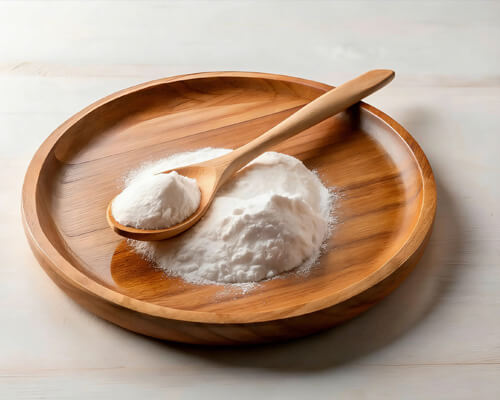
Inner Mongolia Boyuan Holding Group Co., Ltd., a leading enterprise in China's natural alkali chemical industry, has long been deeply involved in the research, development, production, and standardization of industrial sodium bicarbonate, possessing a solid industrial foundation and technological accumulation. In this task of leading the revision of the national standard, the company strictly followed the national standard formulation and revision procedures, efficiently advancing each stage of the work to ensure the scientific, standardized, and applicable nature of the standard revision. During the revision process, the company based its work on actual production and testing data, rationally set technical indicators, fully absorbed the advantages of different processes in the industry, and considered diverse application scenarios in product classification, making the standard content more advanced and operable, providing a strong basis for quality improvement and technological progress in the industry.On January 1, 2026, the national standard "Industrial Sodium Bicarbonate" (GB/T 1606-2025), revised under the leadership of Inner Mongolia Boyuan Holding Group, officially came into effect. Based on Boyuan's actual production and testing data, this standard rationally sets technical indicators, fully absorbs the advantages of different processes in the industry, improves product quality requirements, and consolidates Boyuan's technological leadership in the baking soda industry."Malan" brand baking soda continues to deeply penetrate the food, pharmaceutical, environmental protection, and personal care fields, with domestic and international demand continuing to expand.The 2025 interim report shows that the baking soda business achieved revenue of 762 million yuan, accounting for 12.88% of total revenue. With the commissioning of the Alashan Phase II and carbon recovery projects, the revenue share will further increase.The products have obtained multiple certifications, including Green Food, ISO9001, HALAL, and KOSHER, and enjoy high international market recognition.

Inner Mongolia Berun Shareholding Group Co., Ltd.

Every time I see Inner Mongolia Berun Shareholding Group in a headline, memories of trips through industrial cities return—harsh winters, endless railcars, and factories humming with purpose. Out here, manufacturing isn't a buzzword; it's a foundation. Berun isn’t just a company, it's an engine that helps drive the region’s economy and sets a benchmark for how raw materials producers shape both local surroundings and far-off markets. Their operations have fed supply chains in ways most consumers never notice. From soda ash fueling glassmaking to chemicals supporting daily products, Berun threads quietly through much of daily modern life.Look beyond the numbers, and it comes down to jobs provided, schools funded through tax revenues, and opportunities created for suppliers around Hetao and beyond. Growing up around similar environments, one lesson rings clear—companies like this define prosperity for entire towns, putting food on kitchen tables and electricity in local grids. Watching Berun expand during my own career in mining journalism, I saw how responsible extraction can juggle tough questions: how much water gets diverted, how energy flows from coal fields, and how labor standards grow along with profits.Competition in basic materials isn’t only about who runs the biggest operation. It’s about who adapts to shifting regulations, turbulent global prices, and new technology. My own reporting has shown how tariffs, trade wars, and supply shortages overseas can turn last quarter’s boom into this quarter’s nail-biter. Chinese chemical groups have learned to adapt, often better than politics might suggest. Berun stands as an example of how state and private interests sometimes converge, spurring investments into cleaner processing and logistics.Cutting pollution remains a sticky point. Industry commentators bring up Berun when discussing emissions legislation or tight deadlines for cleaner air. Photos from the company's sites reveal a scene familiar from Rust Belt towns—long stacks, organized lots, and transport lines snaking toward distant markets. Locals have voiced complaints about environmental odors, yet feedback also points out that the group funds modern wastewater controls and emission scrubbers to stay ahead of Beijing’s ever-tougher mandates. Fixing longstanding environmental damage can't happen overnight. During my visits to other mining areas, I saw how even small investments in cleaner practices pay off over decades—often translating into real estate appreciation or fewer health clinic visits.Consumers rarely get direct access to companies deep in the supply chain, and that creates risk. Transparency forms the core of modern commercial trust. Responsible operators publish impact records and share plans with both shareholders and the public. I appreciate when companies open their books about water use, energy savings, supply chain sourcing, and charitable donations—not just for investors, but for everyone who lives in the shadow of those plants.Recent years have brought new rules demanding ESG performance in China. That pressure doesn't only appear on a spreadsheet; it resonates in real village life. It means cleaner local rivers, better training for workers, and safety gear that doesn’t cut corners. I’d like to see Berun lead with regular public reporting—not glossy marketing, but hard data and open invitations for independent watchdogs to tour their grounds and speak to employees. The strength of a company shows in its willingness to let others judge its promises.The biggest barrier remains trust—between managers and locals, between buyers and sellers, and between industries looking to survive another year. With Chinese industry still carrying bruises from past pollution and labor scandals, there’s no substitute for steady improvement and honest outreach. Modernizing equipment and retraining staff takes cash, planning, and a top-down commitment to safety.Berun holds enormous influence as a bellwether for other resource-intensive companies. By prioritizing higher standards rather than shortcuts, they can set an example that shifts market expectations everywhere from Ordos to North America. When companies act with foresight, the region benefits through stable employment, skilled training, and lasting infrastructure. Global buyers increasingly demand proof of both environmental care and quality control, so the most successful companies will be those that view change as competitive advantage—never just added cost.Traveling through Inner Mongolia reminds me that industry rooted in local communities needs to balance tradition with progress. The story of Inner Mongolia Berun Shareholding Group intertwines with the story of thousands of families, regional development, and the uncertain future of basic materials in world supply. Every successful quarter and new safety upgrade creates a platform to build both economic and environmental resilience. That’s how companies outlast fads, downturns, and regulatory storms—by proving, year after year, that prosperity built on responsibility always goes further.

Berun Group Natural Alkali Chemicals

Living in a world powered by chemicals, people rarely stop to think about the stuff that keeps factories running, crops thriving, and even bread rising in the oven. Large-scale producers like Berun Group draw attention because they don't just ship minerals; they supply the backbone for dozens of everyday goods. Their natural alkali products support glassmaking, pulp processing, and a long list of other fields. Once you dig in, the reach of alkali chemicals, mainly soda ash, pops up everywhere, from water softening facilities to soap factories. Over the years, natural soda ash earned the nod for its lower environmental footprint compared to synthetic methods. Pulling this compound from trona ore takes less energy, reduces greenhouse gas emissions, and sidesteps some of the harsh byproducts. I’ve seen firsthand how choosing the cleaner source pushes plants and industries toward greener production. No magic fix solves all environmental headaches, but opting for naturally sourced soda ash marks a real difference. The Berun Group’s role stretches beyond digging minerals and shipping containers. Their business churns out thousands of jobs, not only within the walls of their plants but also throughout mining communities and downstream sectors. These plants often anchor local economies, becoming centers for technical training and stable paychecks. I remember visiting a town once anchored by a facility like Berun’s; neighbors depended on shifts that went all night. The supply chain runs deep, linking transportation, logistics, equipment servicing, and even regional research programs focused on sustainability. There’s a knock-on effect; one strong facility can ripple resilience through an entire region. In tight economic times, a steady export market like soda ash gives local economies breathing room—particularly if those communities historically struggle to lure diversified industries.Environmental risk follows any industrial-scale operation, and for a company shipping minerals at this scale, scrutiny always makes sense. Companies like Berun face mounting pressure from activists, regulators, even consumers who now track supply chains before they pick up a soda. Trona mining draws less criticism than coal or rare earth elements, but mining never stays mess-free. Some parts of the process can threaten groundwater, disrupt river flows, or damage habitats if not kept in check. I've had lively debates with environmental engineers who warn that improving the efficiency of soda ash production is only one side of the story—the other comes from honest waste management and ecological repair. Meaningful oversight and credible sustainability reporting matter more every year. The smartest operators took steps to monitor water tables, reclaim spent land, and update fleets to cut emissions. Where Berun and others keep the bar high, people begin to trust their product claims.Chemicals from mining always track the weather of global trade. The COVID pandemic—then the aftershocks of war in Eastern Europe—threw shipping prices into chaos. Outfits like Berun remained standing because the world still needed glass for solar panels, detergents for hospitals, and pulp for basic packaging. Natural soda ash caught an advantage during energy crunches, as its production needs fewer fossil fuels than synthetic alternatives. This market volatility lights a fire under companies to adapt quickly. I’ve talked to logistics analysts who spend their days hedging bets in shipping and pricing, working phone lines late at night to keep contracts alive. Here’s where being vertically integrated—mining, refining, and distributing under one parent—turns a rough month into a salvageable quarter. The scale of Berun’s operations lets them ride out supply dips or price hikes better than small or fragmented outfits.Stagnant companies don’t last in resource extraction. Incremental improvements—new filters to cut dust, systems that recycle water, or blending in digital monitoring—decide whether outfits like Berun earn investor trust and social license. The most promising moves in this space link digital modeling with hands-on science. On a plant tour, I saw computer systems dialing in real-time data about ore quality, energy use, and even worker safety alerts. These investments aren’t simple add-ons; they build resilience against labor shortages and regulatory swings. By automating pieces of the process, companies catch chemical leaks, spot inefficiencies, and use fewer resources. On the labor side, upskilling workers to run smarter machines improves retention and career growth. Decades ago, jobs in mining and chemical processing made little room for technical learning. Today, partnerships with universities or trade schools spark new enthusiasm, especially among young engineers who refused to settle for the reputation of “dirty industry.” Berun, by following this pattern, helps shift public thinking on the future of chemicals.Supply chains built around natural alkali reach across borders, moving minerals by railcar and memory stick. Buyers in Asia, Africa, and Europe all care about cost, reliability, and increasingly, sustainable sourcing. Transparent documentation carries real weight—a grainy PDF with a vague sustainability statement won’t cut it. Companies here shape their legacy by adopting best practices in transparency, land use, and community outreach. I’ve witnessed spirited town hall meetings where mining firms had to prove they listened to farmers and ranchers worried about aquifers. Trust grows slowly, usually through direct engagement—posting water test data, funding local infrastructure, stepping up during emergencies. For Berun, future security lies not just in supply contracts, but in building social capital with the communities around each plant and the customers buying their chemicals. Neglecting these roots breeds opposition or even costly shutdowns; investing in open communication and honest data reporting delivers real returns.Demand for natural alkali will hold so long as economies grow, infrastructure updates, and consumer products diversify. The path forward revolves around smarter, cleaner mining paired with steady community dialogue. While raw mineral exports matter today, leadership in this sector comes from investing back into sustainability improvements—water recycling, energy-saving upgrades, and long-term land restoration. In practice, the industry rewards those who prove their worth not just through profit, but through credibility and forward thinking. Berun Group faces the same test as every major player; meet modern environmental standards, forge lasting regional partnerships, and use smart innovations to lift both the business and the world around it. Responsible stewardship and strong leadership shape companies that last well beyond the current boom cycle.